 Orbital Focus
Apollo 11 Quiz: 12 Moon Landing Questions With Answers and Sources
Six questions from our Apollo 11 video plus six bonus questions, each checked against NASA mission records. Questions come first so you can print them; answers, reasons, and sources sit below.
 By Chris HabibUpdated 8 min read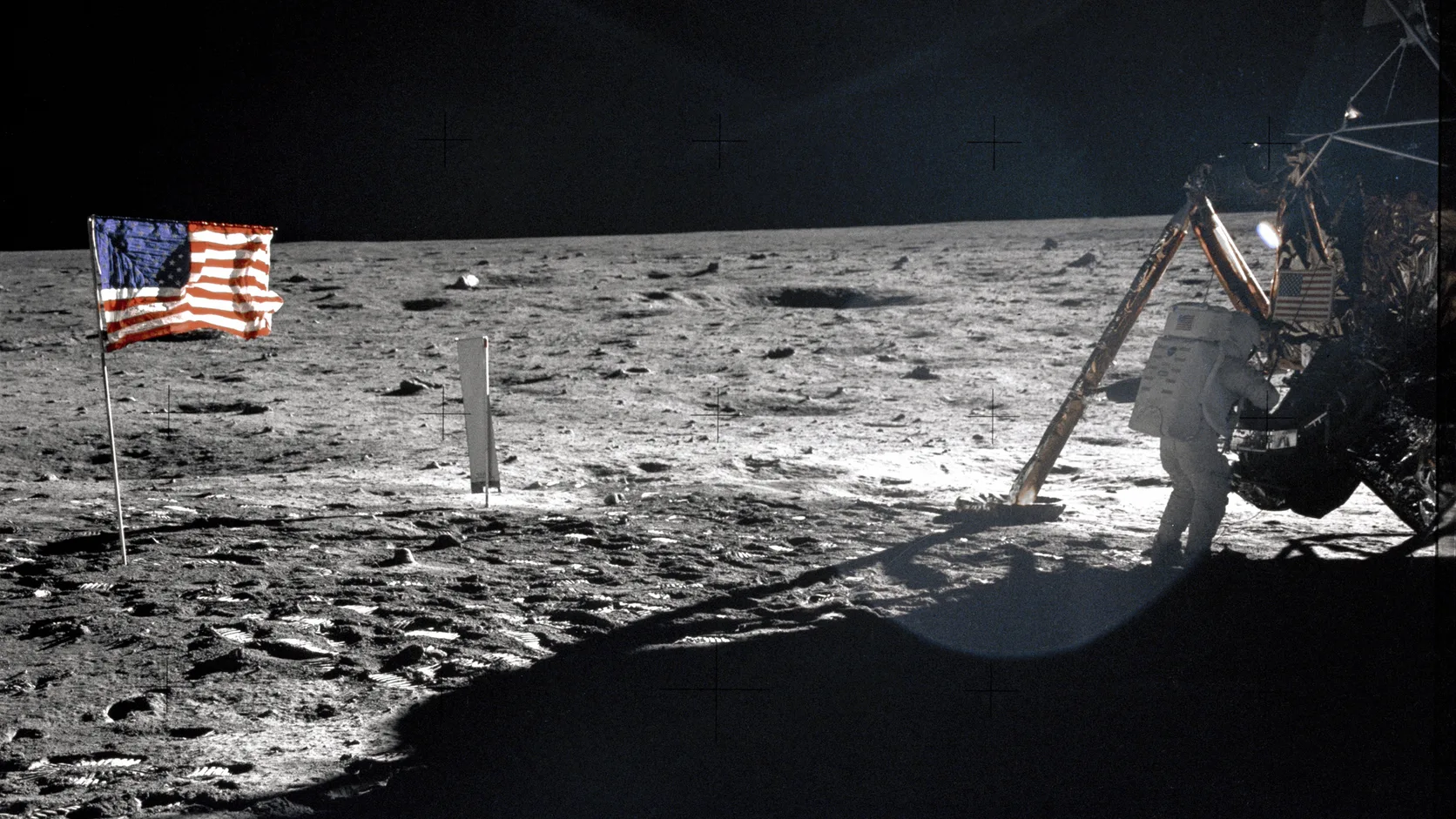
The bottom line
Apollo 11 landed on July 20, 1969, after a three-day trip. The crew spent about two and a half hours walking outside during a stay of nearly 22 hours. Only twelve people have ever walked on the Moon. The full 12-question quiz and answer key are below.
Apollo 11 landed on the Moon on July 20, 1969, three days after launch. Neil Armstrong and Buzz Aldrin spent about two and a half hours outside during a stay of nearly 22 hours, while Michael Collins circled overhead in Columbia. Twelve people have walked on the Moon, and none since 1972.
That's most of the answer key. The rest of this page is a 12-question quiz you can print or read aloud: the six questions from our short Apollo 11 quiz video (watch it on the Orbital Focus Instagram or TikTok), plus six bonus questions. Every answer links to the NASA record it came from.
The 12 questions
Give yourself five seconds per question, the same pace as the video. Write down a letter for each one before you scroll to the answers.
From the video
1. In what year did Apollo 11 land on the Moon?
A) 1961 · B) 1965 · C) 1969 · D) 1972
2. Apollo 11 took about how long to reach the Moon?
A) 3 hours · B) 3 days · C) 3 weeks · D) 3 months
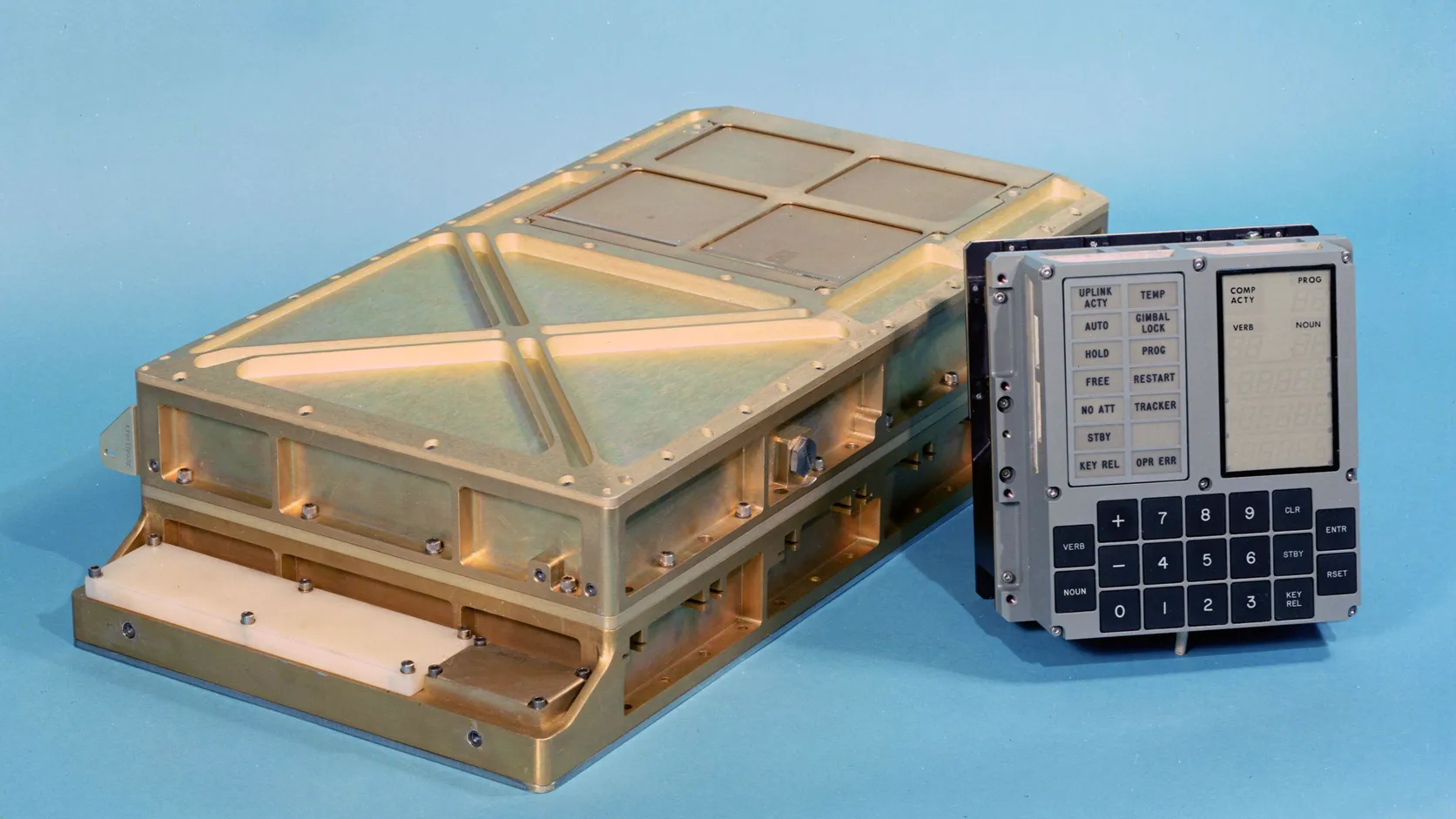
3. How much working memory (RAM) did Apollo 11's guidance computer have?
A) About 4 KB · B) About 4 MB · C) About 4 GB · D) About 4 TB
4. Which computer alarm code went off during Apollo 11's Moon landing?
A) 007 · B) 404 · C) 911 · D) 1202
5. About how long did the Apollo 11 moonwalk last?
A) 15 minutes · B) 2.5 hours · C) 12 hours · D) 22 hours
6. How many people have ever walked on the Moon?
A) 2 · B) 6 · C) 12 · D) 24
Bonus round
7. Who stayed in lunar orbit aboard the command module Columbia?
A) Michael Collins · B) Buzz Aldrin · C) Neil Armstrong · D) Jim Lovell
8. Eagle landed at 4:17 p.m. EDT. About how long passed before Armstrong's first step?
A) 6 minutes · B) 1 hour · C) About 6.5 hours · D) 2 days
9. Where did Apollo 11 splash down?
A) The Atlantic, off Florida · B) The Gulf of Mexico · C) The Indian Ocean · D) The Pacific, southwest of Hawaii
10. Which ship recovered the crew?
A) USS Missouri · B) USS Hornet · C) USS Iwo Jima · D) USS Nimitz
11. How long did the whole mission last, from launch to splashdown?
A) About 3 days · B) About 5 days · C) About 8 days · D) About 21 days
12. Which piece of Apollo 11 equipment do scientists still use for research today?
A) The seismometer · B) The laser ranging retroreflector · C) The TV camera · D) The flag
Answer key
Correct letters: 1 C · 2 B · 3 A · 4 D · 5 B · 6 C · 7 A · 8 C · 9 D · 10 B · 11 C · 12 B
| # | Answer | Why |
|---|---|---|
| 1 | C) 1969 | Eagle landed in the Sea of Tranquility at 4:17 p.m. EDT on July 20, 1969. |
| 2 | B) 3 days | Launch was 9:32 a.m. EDT on July 16. NASA puts the crew in lunar orbit three days later, on July 19. |
| 3 | A) About 4 KB | The computer had 2,048 sixteen-bit words of erasable memory, which works out to about 4 KB. The programs lived separately in fixed "rope" memory. |
| 4 | D) 1202 | Both 1202 and 1201 program alarms sounded during descent. They signaled an overloaded computer, which kept working. |
| 5 | B) 2.5 hours | NASA's Mission Report: surface exploration "was concluded in the allotted time of 2-1/2 hours." |
| 6 | C) 12 | Two astronauts on each of six Apollo landings, 1969 to 1972. Nobody has walked on the Moon since Apollo 17. |
| 7 | A) Michael Collins | Armstrong and Aldrin took Eagle down while Collins orbited in Columbia. |
| 8 | C) About 6.5 hours | Landing came at 4:17 p.m. EDT; Armstrong was ready to step out at 10:56 p.m. EDT. |
| 9 | D) The Pacific | Columbia splashed down on July 24, 1969, about 950 miles southwest of Hawaii. |
| 10 | B) USS Hornet | The aircraft carrier Hornet was the prime recovery ship. |
| 11 | C) About 8 days | Splashdown came 195 hours and 18 minutes after liftoff: 8 days, 3 hours and 18 minutes. |
| 12 | B) The retroreflector | Scientists aim lasers at the Apollo reflectors to measure the Moon's orbit. NASA says that research "continues to this day." |
Score it: 11 or 12 means you could brief Mission Control. 8 to 10 is a solid landing. 5 to 7 means a few alarms, but you got down. Under 5? Read the traps below, then try again tomorrow without looking.
The trap answers, explained
A few wrong answers in this quiz are wrong in useful ways. They are the mix-ups people make most often when they retell the story.
| If you picked | Why it's tempting | What actually happened |
|---|---|---|
| 22 hours for the moonwalk | NASA does describe a 22-hour stay on the Moon | That's the whole stay, most of it inside Eagle. The walk outside was one excursion of about 2.5 hours. |
| 24 people on the Moon | Twenty-four people flew to the Moon on Apollo | Flying there is not walking there. Only 12 stepped onto the surface. |
| About 4 MB of memory | Modern "small" numbers start at megabytes | About 4 KB of erasable memory. Even counting its fixed rope memory of 36K words, the computer held well under 100 KB. |
| 1201 (if you know the story) | It really did sound too | The Mission Report logs one 1201 and several 1202 alarms. Only 1202 was an option here. |
| 1972 for the landing | It is a real Moon-landing year | 1972 was the last landing, Apollo 17 in December. The first was 1969. |
The 1202 alarm is the best story in the set. The rendezvous radar was eating about 15 percent of the computer's time during descent, according to NASA's own history of its flight computers. The computer's restart software handled the overload, and the landing continued. You can read the exchange as it happened in the Apollo Lunar Surface Journal transcript linked below: "It's a 1202."
Run it with a class or a group
The quiz works as a ten-minute warm-up, a quiz-night round, or a history-class opener.
- Read the question and all four options aloud once. Then count five seconds, or run a 5-minute timer for the whole first round of six.
- Collect letters before revealing anything. Paper, fingers, or a show of hands all work.
- Reveal one answer at a time with its "why" line. The reason matters more than the letter.
- Stop on the traps. Ask who picked 22 hours or 24 people, and have someone explain the difference in their own words.
- Play the bonus round a day later. Repeat two questions from the first round at the start. Answering them again from memory is the point.
For older students, one good follow-up task: open the Mission Report's landing event table and find the exact times of the program alarms. For more space history in the same classroom format, the Sputnik 1 lesson on our blog has a replayable launch and a full lesson kit.
Why quizzing helps you remember
Trying to answer before you see the answer is a study technique, not only a game. In a 2006 experiment, Henry Roediger and Jeffrey Karpicke had students either restudy prose passages or take recall tests on them. Restudying did better on a test five minutes later. On tests two days and one week later, the students who had practiced recalling the material remembered substantially more, even though the restudy group felt more confident.
That study used reading passages, not space trivia, so treat it as a reason to quiz yourself on your own material rather than a claim about this page. If you want to turn it into a routine, the guide to focusing while studying shows how to give each session a question to answer, and the Pomodoro guide lists "retrieve one topic from memory without notes" as a good use of one timed round.
If a timer that looks like a rocket flight makes that easier to start, that's what Orbital Focus does. Its 15-minute Suborbital Hop is a free starter flight, and the hangar's Saturn V page lists Apollo 11 among the rocket's storied missions (flying the Saturn V needs Premium). You can also try a mission in the browser with the spaceflight simulator.
Frequently asked questions
How many people have walked on the Moon?
Twelve. Two astronauts walked on the surface during each of the six Apollo landings between 1969 and 1972. No one has walked on the Moon since Apollo 17 in December 1972. Artemis II flew around the Moon in April 2026 without landing, and NASA's current plan has landings beginning with Artemis IV.
Who stayed in orbit during the Apollo 11 landing?
Michael Collins. He flew the command module Columbia in lunar orbit while Neil Armstrong and Buzz Aldrin took the lunar module Eagle down to the Sea of Tranquility.
What was the 1202 alarm on Apollo 11?
It was an overload alarm from Eagle's guidance computer during the final descent: the computer had been handed more work than it could finish in the time available. NASA's Mission Report lists several 1202 alarms and one 1201 alarm. NASA's computer history traces the extra load to the rendezvous radar, which tied up about 15 percent of the computer's time. The restart software handled it, the computer kept guiding the landing, and the crew continued.
Sources
All sources were checked on September 24, 2026.
- NASA: July 20, 1969, One Giant Leap for Mankind. Launch time, lunar orbit three days later, Collins in Columbia, landing at 4:17 p.m. EDT, the computer alarms, Armstrong ready to step out at 10:56 p.m. EDT, and two and a half hours of surface exploration. Questions 1, 2, 4, 5, 7 and 8.
- NASA: Apollo 11 mission page. Crew roles, launch and splashdown dates, and the 22-hour stay on the Moon. Questions 5 and 7.
- NASA: Apollo 11 Mission Report, MSC-00171 (1969). Landing in the Sea of Tranquility, the descent event table with 1202 and 1201 alarms, and "the allotted time of 2-1/2 hours." Questions 1, 4 and 5.
- NASA: Computers in Spaceflight, The NASA Experience (Tomayko, 1988), chapter 2. 16-bit words, 2K words of erasable memory, 36K words of fixed memory, and the rendezvous radar load behind the alarms. Questions 3 and 4.
- Apollo Lunar Surface Journal: the Apollo 11 landing transcript. Armstrong: "It's a 1202." Question 4.
- NASA: What Was the Apollo Program? "Twelve astronauts walked on the moon." Question 6.
- NASA Science: Moonwalkers. "24 American astronauts made the trip from Earth to the Moon between 1968 and 1972," and 12 walked on it. Question 6 and the trap table.
- NASA: Apollo 17 mission page. The program's last lunar landing mission, December 1972. Question 6.
- NASA: Artemis II and NASA: Artemis III. Artemis II was a crewed lunar flyby; Artemis III is a low Earth orbit test, with landings beginning with Artemis IV. Question 6 is time-sensitive and will be rechecked after the first Artemis landing.
- NASA: 50 Years Ago, Hornet + 3, The Recovery of Apollo 11. Splashdown 195 hours and 18 minutes after liftoff, about 950 miles southwest of Hawaii, with USS Hornet as prime recovery ship. Questions 9, 10 and 11.
- NASA: Retroreflectors, From Apollo to Mars. Apollo 11 carried retroreflectors, and "research with these Apollo-era lunar retroreflectors continues to this day." Question 12.
- Roediger and Karpicke, "Test-Enhanced Learning," Psychological Science 17(3), 2006. The retrieval practice experiment described above.
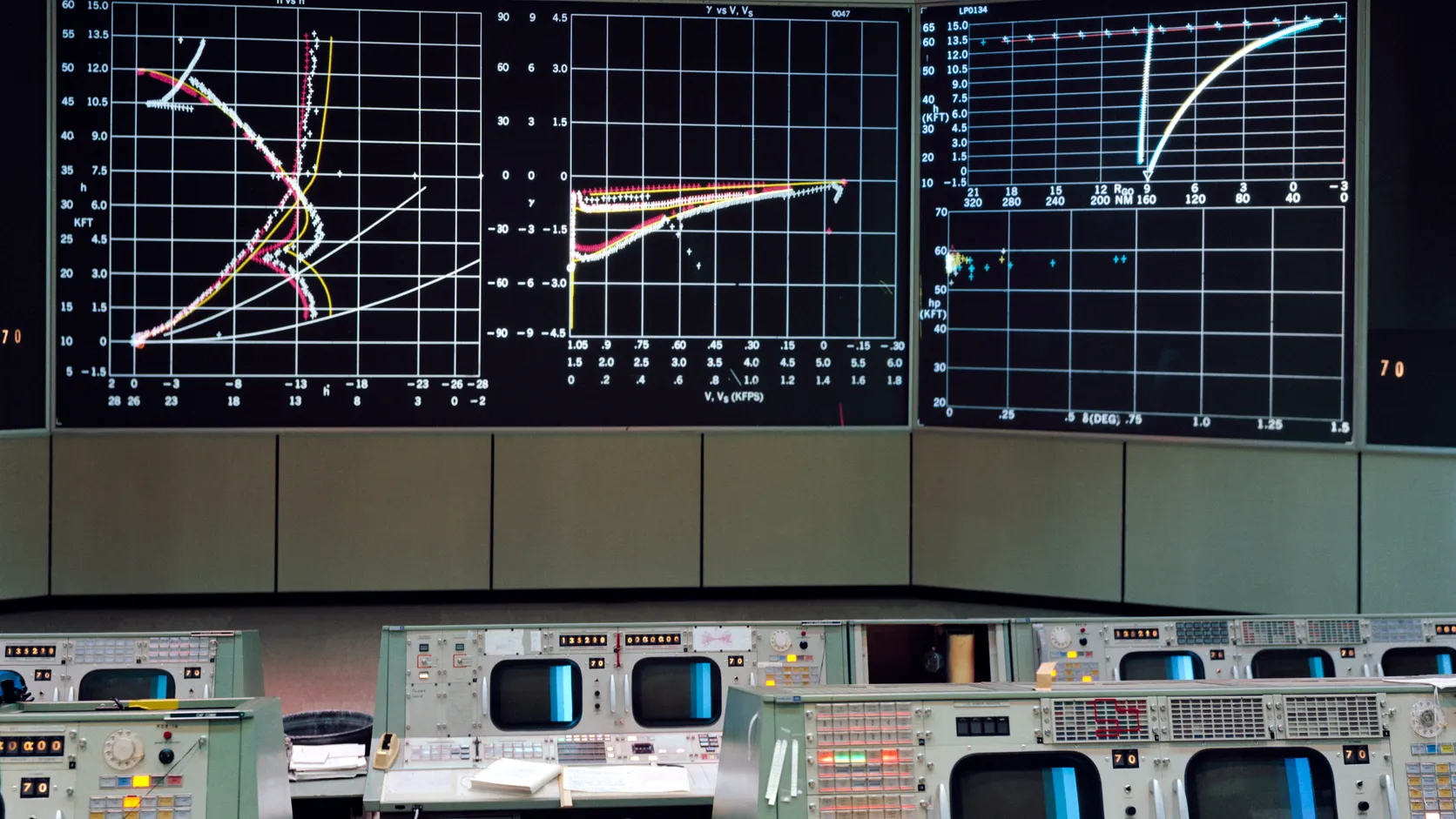
Photos: NASA, public domain, via Wikimedia Commons: Armstrong at Eagle, the Apollo Guidance Computer, and Mission Control during the landing. Orbital Focus is not affiliated with or endorsed by NASA. Send corrections to habib225@gmail.com. Want your next study block to feel like a launch? Start an Orbital Focus session.

Give your next focus block a destination.
Pick a mission length, launch, and keep distracting apps sealed until you arrive.
 Apollo 12 Lightning Strike
 Focus Science Quiz
 One-Minute Mental Reset
 Permanent Daylight Saving Time in 1974

